

Do you experience numbness or tingling in your hand, arm, or fingers? Maybe your arm feels heavy or weak, or you notice pain around your neck, shoulder, or upper chest—especially when reaching overhead. These symptoms may be related to a condition called thoracic outlet syndrome (TOS).
Thoracic outlet syndrome occurs when the nerves or blood vessels traveling from the neck into the arm become compressed as they pass through the thoracic outlet—the space between the collarbone and first rib. While symptoms can vary from person to person, physical therapy can play an important role in reducing symptoms and improving movement and function.
What Is Thoracic Outlet Syndrome?
The thoracic outlet is a small passageway located between the lower neck and upper chest. Several important structures travel through this area, including the brachial plexus, which is a network of nerves that supplies the arm, as well as major blood vessels.
Thoracic outlet syndrome occurs when these nerves or blood vessels become compressed or irritated.
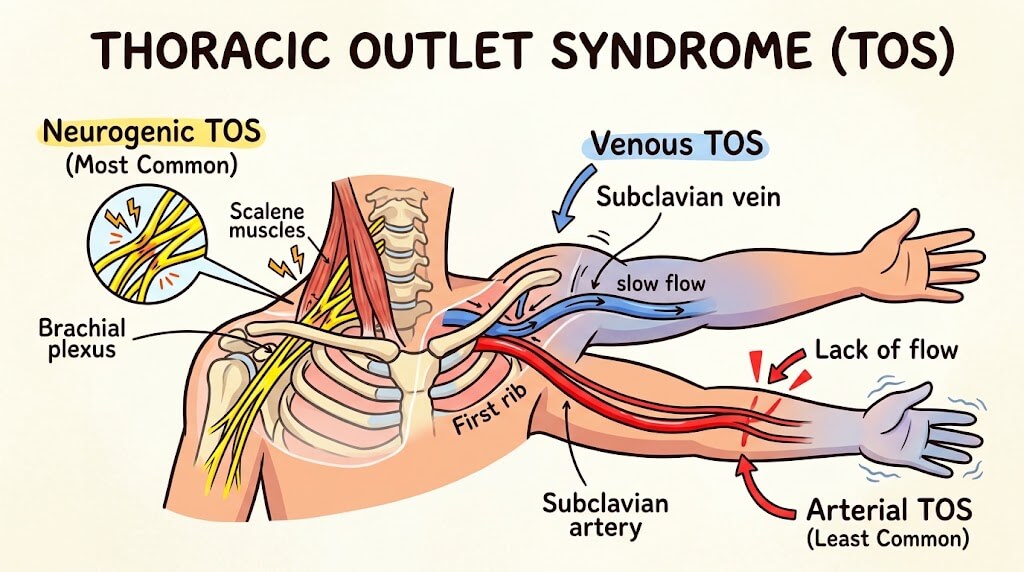
There are three primary types of TOS:
- Neurogenic TOS: The most common type, caused by compression of the nerves of the brachial plexus.
- Venous TOS: Occurs when the veins become compressed, potentially causing swelling, heaviness, or changes in the color of the arm.
- Arterial TOS: The least common type, involving compression of an artery and potentially causing changes in blood flow to the arm or hand.
Because symptoms can overlap with other conditions, such as cervical radiculopathy or carpal tunnel syndrome, an appropriate evaluation is important for determining the underlying cause.
What Are the Symptoms of Thoracic Outlet Syndrome?
Symptoms depend on which structures are being compressed. Common symptoms may include:
- Neck, shoulder, or upper chest pain
- Numbness or tingling in the arm, hand, or fingers
- Arm or hand weakness
- A feeling of heaviness or fatigue in the arm
- Symptoms that worsen with prolonged overhead activity
- Changes in hand or arm temperature
- Swelling or discoloration of the arm or hand
Some people notice symptoms during activities such as reaching overhead, lifting, carrying, working at a computer, or participating in sports.
What Causes Thoracic Outlet Syndrome?
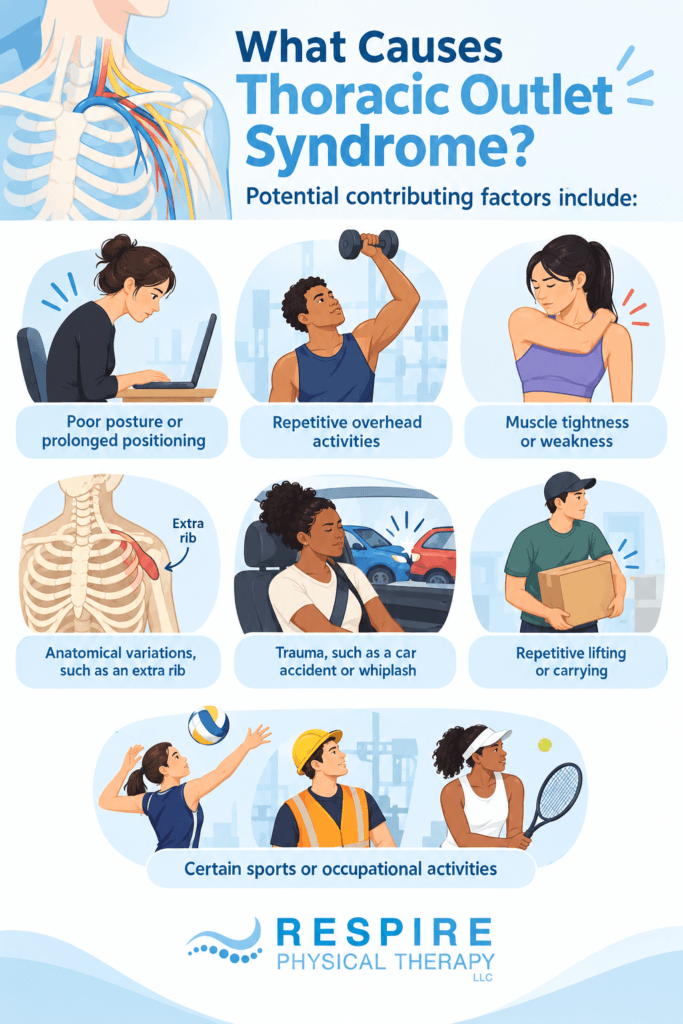
Potential contributing factors include:
- Poor posture or prolonged positioning
- Repetitive overhead activities
- Muscle tightness or weakness
- Anatomical variations, such as an extra rib
- Trauma, such as a car accident or whiplash
- Repetitive lifting or carrying
- Certain sports or occupational activities
How Can Physical Therapy Help?
Physical therapy can be an important part of conservative treatment for neurogenic thoracic outlet syndrome. Your physical therapist will first perform a detailed evaluation to identify factors that may be contributing to your symptoms.
Treatment is individualized, but may include:
1. Postural Training
Your posture can influence the position of the neck, shoulders, and upper chest. A forward head or rounded shoulder posture may contribute to increased stress or reduced space around the thoracic outlet.
A physical therapist can help you improve your posture and develop strategies for maintaining more efficient positioning during work, exercise, and daily activities.
2. Mobility Exercises
Your therapist may use stretching and mobility exercises to address areas such as:
- The pectoral muscles
- The upper back
- The cervical spine
- The thoracic spine
- The shoulder
Improving mobility can help restore more efficient movement and reduce stress on surrounding structures.
3. Strengthening
A physical therapist may prescribe exercises targeting the:
- Middle and lower trapezius
- Serratus anterior
- Rotator cuff
- Deep neck flexors
- Other muscles responsible for scapular and postural control
The goal is not simply to “strengthen the shoulder,” but to improve coordination and control of the entire neck, shoulder, and upper-quarter region.
4. Nerve Mobility Exercises
When nerves are irritated or sensitive, certain movements may help improve their ability to move normally through surrounding tissues.
Your physical therapist may incorporate nerve gliding or nerve mobility exercises when appropriate. These exercises should be performed carefully and should not reproduce or significantly increase your symptoms.
5. Breathing Exercises
The muscles involved in breathing can influence the position and movement of the upper chest and rib cage.
Physical therapists may incorporate breathing strategies to encourage more efficient use of the diaphragm and reduce excessive reliance on accessory breathing muscles in the neck and upper chest.
6. Activity Modification
Certain activities or positions may aggravate TOS symptoms. Your physical therapist can help identify these triggers and modify how you perform everyday activities.
For example, you may learn strategies for:
- Adjusting your workstation
- Taking breaks from prolonged positions
- Modifying overhead exercises
- Improving lifting mechanics
- Gradually returning to sports or recreational activities
The goal is to keep you active while reducing unnecessary irritation.
The Bottom Line
If you are experiencing persistent neck, shoulder, or arm symptoms—particularly numbness or tingling that worsens with certain positions—consider speaking with a healthcare professional to determine the cause and whether physical therapy may be appropriate for you. Call Respire Physical Therapy at the Falls Church Location (703-671-1871) or the Annandale Location (571-369-6728) to schedule an appointment with one of our skilled Physical Therapists today! Click here to request an appointment online and we will contact you as soon as possible.

Tags: painfreeliving, neck pain, washingtondc, health blog, thoracic outlet syndrome, choosept, movement is medicine, arlingtonva, evidence based practice, alexandriava, burkeva, Physical Therapy, fallschurchva, Respire Physical Therapy, ptworks, Back pain, Shoulder Pain, annandaleva, physical therapist